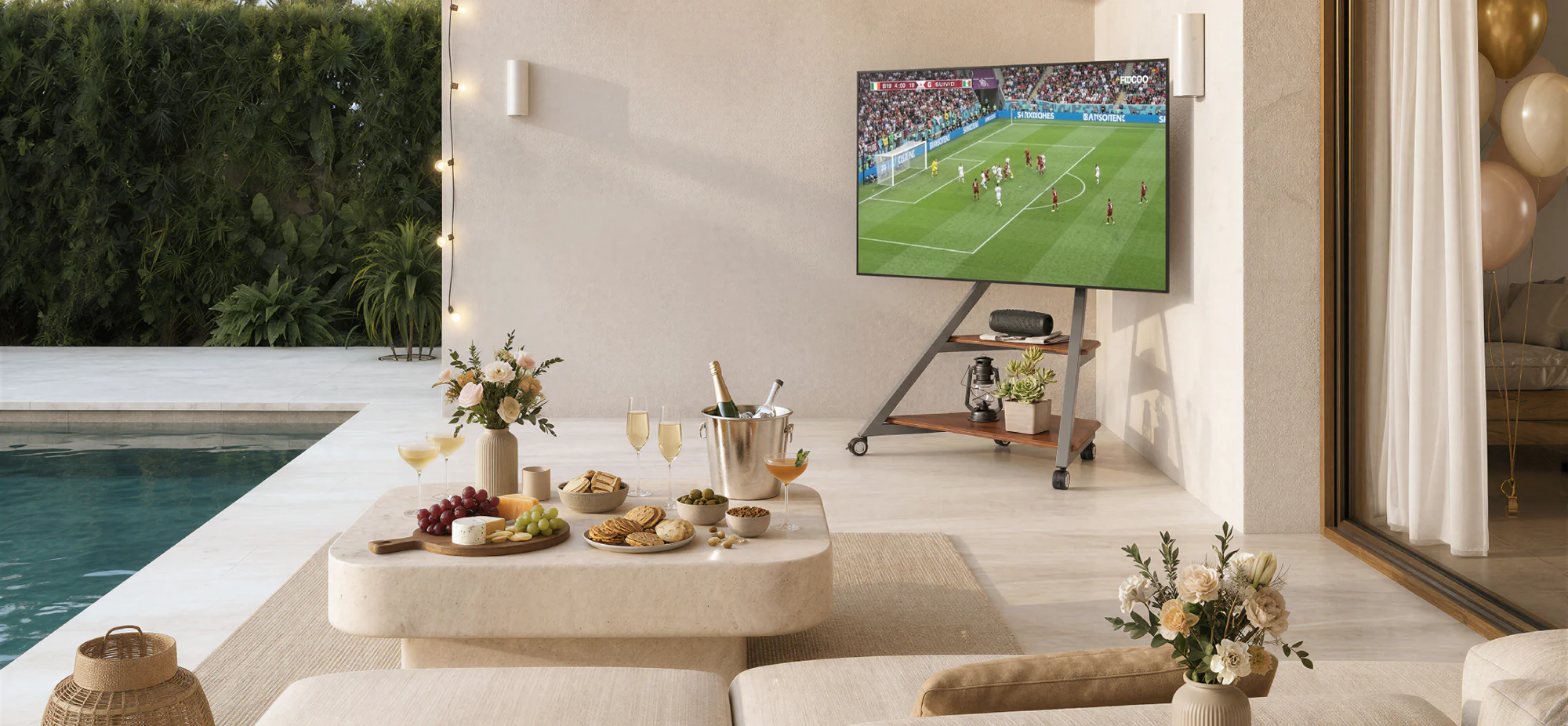
You found the perfect apartment. Compact, functional, maybe even in a great neighborhood. And then you brought home a chunky TV stand that now eats half your living room
We've all been there.
The problem isn't the TV it's the stand beneath it Most furniture stores push wide, deep entertainment units that look fine in a showroom but turn a small room into an obstacle course What you actually need is a slim TV stand that holds your screen without bulldozing the rest of your floor plan
This guide cuts through the noise. We'll walk you through what measurements matter, which styles actually work in tight rooms, and the seven best slim TV stands worth your money in 2025
Why Slim Actually Matters And What That Word Really Means
Before we get into specific products let's talk about what makes a TV stand slim in the first place because the word gets thrown around pretty loosely
Depth is the real number to watch. Width matters too, but depth how far the stand sticks out from your wall is what actually determines how much floor space you lose. A standard entertainment center runs 18 to 20 inches deep That's fine in a large living room In a 10x12 bedroom or a studio apartment, that's 20 inches you'll be squeezing past every single day.
For small spaces, you want a TV stand with a depth of 14 inches or less. The sweet spot is 12–14 inches shallow enough to keep walkways clear but stable enough to hold a 50-inch TV without wobbling.
Width matters too, but differently. The general rule your TV stand should be at least as wide as your TV (measured diagonally), but ideally not wider than the wall section it's sitting against. For most small rooms, stands between 36 and 48 inches wide hit the sweet spot Go narrower than 36 inches and storage gets cramped. Go wider than 55 inches in a small room and it starts to feel like the stand owns the room instead of you.
What to Actually Look for Before Buying
Here's the honest list the stuff most buying guides skip because it's less exciting than listing specs.
1. Depth First, Width Second
As mentioned, depth determines your floor space loss Always filter by depth before anything else If a listing doesn't include depth measurements, assume it's probably deeper than you want and move on.
2. Cable Management or You'll Regret It
Small spaces make messy cables worse. When your TV, streaming stick, soundbar, game console, and router all share one small corner, cables become a real problem fast. Look for stands with a cutout in the back panel or a cable channel built into the side This isn't a luxury feature it's a sanity saver.
3. Closed Storage Open Shelves Usually
Open shelves look clean in photos. In real life, they collect clutter. A router, two remotes, a game controller, a charging cable your open shelf becomes a dumping ground within a week. Closed doors or drawers keep your small space looking clean even when life gets messy.
That said, if you have a gaming console that runs hot (PS5, Xbox Series X), make sure it gets ventilation. A fully sealed cabinet without airflow can cause overheating issues. Look for stands with ventilated backs or adjustable shelving.
4. Weight Capacity Isn't Just About Your TV
Your TV might weigh 30 pounds, but you're also stacking devices, soundbars, and possibly a cable box on that stand. Check the weight limit on the top surface and on individual shelves. Budget particleboard stands often list a generous total weight capacity that assumes it's spread evenly — the moment you put a heavy soundbar in one corner, you find out the hard way.
5. Leg Height and Visual Airiness
Stands with visible legs (even short ones) create a visual gap between the furniture and the floor. In a small space, this gap makes the room feel bigger. A boxy stand sitting directly on the floor feels heavier and makes the room feel more crowded even if the dimensions are identical. It sounds like a minor detail. It isn't.
The 7 Best Slim TV Stands for Small Spaces in 2026
1. Convenience Concepts Big Sur TV Stand Best Overall for Small Rooms
Best for: Compact living rooms and bedrooms Dimensions: 36"W x 15.5"D x 35.5"H Price Range: $80–$120
This one shows up in "best of" lists constantly, and for good reason. At only 36 inches wide and 15.5 inches deep, it doesn't dominate a small room. The two glass-front doors give you closed storage (which you want) without fully hiding what's inside — useful if your streaming devices have IR remotes.
Available in nine finishes including White, Weathered Grey, and Dark Walnut, so it actually matches real homes rather than just showrooms. The solid pine construction is noticeably more durable than similarly-priced particleboard options.
The only honest criticism: it tops out at 40-inch TVs. If you're running a 55-inch screen, this isn't your stand.
2. SPIKSMED (IKEA) Best Budget Pick Under $100
Best for: Renters, studio apartments, frequent movers Dimensions: ~46"W x 14"D x 19"H Price Range: $60–$90
IKEA's SPIKSMED is a genuine small-space winner. The depth is under 14 inches, which keeps floor space wide open. It combines open and closed storage two compartments behind doors for cables and devices, and open cubbies above for display or a soundbar.
The lowline height about 19 inches keeps the TV near eye level when you're seated on low furniture, which is actually a real ergonomic plus. Sitting too high strains your neck over years of TV watching.
The downside is IKEA assembly. Budget 2–3 hours if it's your first time. And the surface finish scratches more easily than wood veneer alternatives. But if you're in a temporary space or tight on budget nothing competes with SPIKSMED at this price
3. Sorbus TV Stand Dresser Best for Small Bedrooms
Best for: Bedrooms and dorm rooms Dimensions: 38"W x 11.8"D x 31"H Price Range: $70–$100
Less than 12 inches deep. That's the headline number for the Sorbus. In a bedroom, this stand almost disappears from a floor-space perspective.
What makes it unique is the dresser-style design two drawers sit below the TV surface, giving you storage for clothes, bedding, or anything else you'd normally keep in a separate piece of furniture. In a small bedroom, this can replace the need for a separate dresser entirely, which is a genuine space-saving trade.
Multiple buyers confirm it's sturdier than the price suggests. The assembly is straightforward. The main complaint in reviews is that the drawers don't have soft-close mechanisms, which is a fair criticism at this price but not a dealbreaker.
4. Belleze Floating Wall-Mounted TV Console Best Space-Saver Overall
Best for: Renters who can drill, small living rooms, modern aesthetics Dimensions: Varies (typically 47"W x 11"D x 14"H when mounted) Price Range: $90–$140
Wall-mounted stands deserve a spot on this list because they're technically the slimmest option available — they free up 100% of your floor space. If you can put holes in your walls, this is the most impactful upgrade you can make in a small room.
The Belleze floating console sits flush to your wall with three open cubbies for storage. The 11-inch depth is unbeatable. Installation takes about an hour with basic tools and two people — don't try to do it solo unless you enjoy frustration.
One real limitation: you need solid studs or proper wall anchors. Drywall alone won't hold this safely. Check your wall type before you order.
5. Homebaa Mid-Century Modern TV Stand with Casters Best for Renters Who Rearrange
Best for: People who move furniture often, flexible room setups Dimensions: ~40"W x 14"D x 20"H Price Range: $120–$160
If you rearrange your room every few months (or just want the flexibility to move your setup without drama), casters are underrated. The Homebaa's mid-century wooden frame looks substantial without being heavy, and the vertical base design means it can tuck against narrow walls without clashing with the room visually.
The built-in LED strips are a bonus not a gimmick in this case. They define the viewing area without requiring separate ambient lamps, which matters in a small space where every outlet and surface counts.
Assembly is involved, but the end result is solid. The push-to-open drawers are a nice detail that eliminates protruding handles again, this matters in tight spaces where bumping furniture is a daily reality.
6. Torme Media Unit by Article Best Premium Pick
Best for: Living rooms with design ambitions, Scandinavian-style spaces Dimensions: Available in multiple widths (36", 48", 60") Price Range: $700–$900
Yes, it's expensive. But the Torme earns it.
The smoked oak finish and soft-close cabinet doors are what separate this from budget options. But the real reason it's on this list: the multiple width options. Starting at 36 inches, you can match it exactly to your available wall space rather than compromising. The rounded legs lift it off the floor visually, and the cable cut-outs are actually well-placed (rear and sides), not just punched through wherever was convenient.
This is a buy-once piece. If you're tired of replacing $100 stands every two years, the Torme makes economic sense over a five-year horizon.
7. Beautiful by Drew Barrymore Fluted TV Stand Best for Style-Forward Spaces
Best for: Apartments where aesthetics matter, design-conscious buyers Dimensions: 60"W x 15"D x 26.5"H Price Range: $200–$250
At 60 inches wide, this is the largest stand on this list but it earns its spot because the fluted sliding doors and low-profile height keep it from feeling bulky even at that width. The depth at 15 inches is on the higher end of "slim" but still manageable.
The fluted door design does visual work in a small space it creates texture and interest that breaks the flat-box look common to budget TV furniture. Multiple buyers note it looks significantly more expensive than $200.
The one honest note: 60 inches is wide. Measure your wall first. For rooms under 10 feet wide, the 48-inch Torme or 36-inch Big Sur is a better proportional fit.
Quick Size Reference: What Fits Where
Room Size Recommended Stand Width Max Depth Notes
Under 100 sq ft (studio/dorm) 36–40 inches ≤12 inches Wall-mounted if possible
100–150 sq ft (small bedroom) 36–48 inches ≤14 inches Dresser combo ideal
150–200 sq ft (small living room) 48–55 inches ≤15 inches Legs add visual airiness
200+ sq ft (medium living room) Up to 60 inches Up to 16 inches More options available
Common Mistakes That Cost People Money
Buying before measuring. This sounds obvious. It happens constantly. Measure your wall section, measure your walking paths, and then add 6 inches of breathing room on each side of where the stand will sit. Write those numbers down before you open a browser.
Prioritizing storage over depth. A stand with six shelves sounds useful. But if it's 20 inches deep and you're in a small room, you'll hate it within a month. Storage you can reach without wedging past furniture isn't storage it's furniture clutter.
Ignoring TV weight limits on wall mounts. Wall-mounted stands require wall anchors rated for your TV's weight plus a safety margin. A 65-inch OLED can weigh 60+ pounds. Anchor for more than that.
Going too short for your TV. A 32-inch stand holding a 55-inch TV looks proportionally wrong and can actually be unstable if the TV's base is wider than the surface. Your TV's base should sit comfortably within the stand's width.
Floating vs. Floor Stand: Which is Right for Your Space?
Choose floating (wall-mounted) if:
You own your space or have a landlord who allows drilling
You want maximum floor space freed up
Your walls have accessible studs or you're comfortable with proper anchors
You have kids or pets and want the TV clearly elevated
Choose a floor stand if:
You rent and can't drill
You move frequently
You need closed storage for devices and cables
Your floors are uneven (some floating mounts require level walls)
There's no universally right answer. The wall-mounted option wins on floor space; the floor stand wins on flexibility and storage. Most small-space renters end up happier with a quality floor stand than fighting with wall anchors they'll have to patch later.
FAQ: The Questions Most People Have Before They Buy
What is the ideal depth for a slim TV stand? For most small spaces, 12–14 inches is the ideal depth. Under 12 inches starts to feel unstable for larger TVs. Over 16 inches and you're losing meaningful floor space.
Can a 55-inch TV fit on a 48-inch stand? Technically, yes the 55-inch measurement is the diagonal screen size, and the physical base is typically narrower. But it can look visually unbalanced. A 48-inch stand is the minimum recommended width for a 55-inch TV; 55–60 inches is more comfortable.
Are TV stands with glass shelves safe? Tempered glass shelves are generally safe and rated for significant weight. Standard glass is not. If a listing doesn't specify tempered glass, assume it's standard and treat it accordingly.
How high should a TV stand be? The center of your TV screen should align roughly with eye level when you're seated. For a standard sofa height, that's usually 42–48 inches from the floor to screen center. Low-profile stands (18–24 inches tall) work well with low sofas and floor cushions.
What if I need storage but also want slim? Vertical storage is your friend. Look for stands that use height rather than depth for extra shelving taller narrow units with stacked shelves keep the depth minimal while increasing storage capacity.
Final Word
The best slim TV stand for a small space isn't the one with the most features or the lowest price it's the one with the right dimensions for your specific room. Start with depth. Then width. Then storage style.
The seven picks on this list cover every budget from $70 to $900, every room type from studio apartments to small family living rooms, and every style from IKEA-simple to Danish-modern. None of them will take over your room. All of them will do their job.
Measure twice. Buy once. And if something in this guide saved you from a return trip to the furniture store, you're welcome.