Sunglasses are one of those rare accessories where function and fashion exist in genuine equal measure. They protect your eyes from cumulative UV damage that builds quietly over years of exposure. They reduce glare that makes driving hiking and beach days genuinely uncomfortable. And they anchor an outfit in a way that almost no other single accessory can — the right pair of sunglasses worn with the right confidence transforms something as simple as a plain white shirt and jeans into a look that feels genuinely considered.
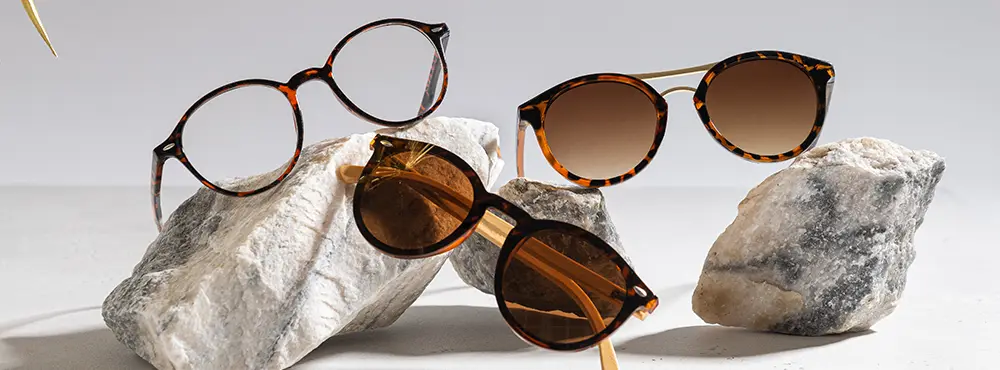
The image above shows exactly why tortoiseshell has maintained its position as the most consistently beloved frame colour in eyewear for decades. Three distinct silhouettes — a clean round frame a double-bridge aviator and a classic rounded style — all sharing the same warm amber and brown acetate pattern all looking simultaneously timeless and completely current. No loud branding no gimmicks just frames that have earned their permanent place in well-chosen collections everywhere.
This guide breaks down every style worth knowing about what actually separates good sunglasses from ones that photograph well and disappoint in person and which specific choices deliver the most versatile long-lasting value.
Why the Right Sunglasses Are Worth Genuine Investment
Before getting into styles and brands it is worth addressing the investment question directly because this is where most people get the decision wrong in one of two directions.
Spending very little on sunglasses means you will likely end up with lenses that scratch within weeks frames that lose their shape and UV protection claims that are not backed by genuine optical standards. Beyond the aesthetics this matters for actual eye health. Cheap lenses that claim UV protection but do not deliver it can actually cause more damage than wearing no sunglasses at all because your pupils dilate behind tinted lenses while the lack of real UV filtering allows more harmful light to reach the retina.
But the argument for spending real money has nothing to do with logo value or brand prestige. A genuinely well-made pair of sunglasses will sit on your face without sliding down every few minutes use lenses that do not distort your vision or cause headaches after extended wear and be constructed from quality acetate or metal that holds its shape and does not go chalky or brittle after two seasons. These are practical meaningful advantages that affect how often you actually wear the sunglasses and how your eyes feel at the end of a long day outdoors.
The practical sweet spot for most buyers in 2026 is somewhere between $80 and $300. Below that you start making genuine compromises on materials and optical quality. Above $300 you are increasingly paying for brand heritage exclusivity and prestige that does not meaningfully translate into a better-performing pair of sunglasses.
Tortoiseshell — The Most Versatile Frame Choice Available
The image above is a perfect argument for tortoiseshell without needing to say a word. The warm amber brown and honey tones work with virtually every skin tone — fair medium and deep alike — which is genuinely not true of every frame colour. Black is close in versatility but slightly higher contrast and less forgiving in certain light. Tortoiseshell sits in a warmer register that flatters most complexions in a way that feels effortless rather than deliberate.
Beyond skin tone compatibility tortoiseshell works across seasons in a way that some trend-forward colours simply do not. It reads as relaxed and casual paired with summer linen looks sophisticated alongside a tailored autumn coat and manages to feel completely appropriate in both professional and social contexts without any visible effort on your part.
The frames in this image are made from acetate which is the right material for tortoiseshell patterns done properly. Acetate allows the layered amber and brown tones to sit within the material itself rather than being printed on the surface giving the pattern genuine depth that catches light differently depending on the angle. This is the detail that separates quality tortoiseshell frames from cheap imitations where the pattern looks flat and uniform from the first glance.
The Classic Round Frame — Timeless for a Reason
Round frames have been worn by genuinely iconic figures across every decade of the twentieth century and they continue to be one of the most searched and purchased silhouettes in eyewear for a simple reason — they balance angular face shapes beautifully while adding a soft intellectual character that very few other frame shapes deliver.
The version shown in the image above is a medium-weight round frame in tortoiseshell acetate with clear lenses demonstrating how this shape functions equally well as prescription eyewear or as a pure style piece. The proportions are key — a round frame that is too small reads as costume-y and fashion-forward in a way that does not age well while a round frame at the right size for the face looks genuinely effortless.
For sunglasses specifically round frames with warm-tinted lenses — amber brown gradient or grey — deliver a vintage-inspired look that has proven its longevity across multiple trend cycles. If you are building a sunglasses collection designed to last rather than be replaced seasonally a quality round or oval frame in tortoiseshell should be somewhere in it.
The Aviator — The Frame That Has Never Stopped Being Relevant
The aviator was originally designed in 1936 for US military pilots with the teardrop-shaped lens specifically sized to protect the entire eye area from sun exposure at altitude. The detail that makes it genuinely remarkable as a fashion piece is that a frame designed for purely functional military use has maintained its status as one of the most universally flattering and consistently fashionable silhouettes in eyewear history essentially unchanged in its core proportions.
The double-bridge version shown in the image above adds a subtle design element — a second bar across the nose bridge — that gives the classic aviator shape a slightly more fashion-conscious character without abandoning the fundamental proportions that make it work. The double bridge particularly suits oval and heart-shaped faces where the additional visual weight at the top of the frame creates balance.
In 2026 the aviator has specifically been reinterpreted in smaller slimmer proportions inspired by 1990s archival styles moving away from the oversized iterations that dominated the mid-2010s. A slimmer aviator with a tortoiseshell or gold metal frame and gradient brown lenses is currently one of the strongest combinations in the category — genuinely wearable for years rather than a trend pick with an obvious expiration date.
How to Match Sunglasses to Your Face Shape
This is the piece of guidance most people either skip entirely or find confusingly contradictory across different sources. Here is the simplified practical version.
Angular faces — strong jawlines square or rectangular shapes — benefit from round or oval frames that soften the face's geometry. The contrast between the angular face and curved frame creates a balanced flattering result.
Round faces benefit from frames with some angularity — rectangular shapes geometric frames or even a classic cat-eye — that add definition and length rather than echoing the face's roundness.
Oval faces are genuinely the most fortunate face shape for sunglasses shopping because most frame styles work without significant risk. The main guidance for oval faces is simply to pay attention to proportion — oversized frames on a smaller oval face can overwhelm while frames that are too small can look slightly off.
Heart-shaped faces wider at the forehead and narrower at the chin suit aviators and bottom-heavy frames that draw visual attention downward and balance the wider forehead. Rimless and light frame styles also work well by reducing visual weight at the top.
Long or narrow faces benefit from oversized frames that add width or any style with strong horizontal lines that visually widen the face.
Lens Technology — What Actually Matters
Frame style and colour choice are the decisions most people focus on but the lens is where the actual performance lives and where genuinely good sunglasses separate themselves from fashion-only purchases.
UV protection is the non-negotiable baseline. Every pair of sunglasses worn outdoors should block 100 percent of both UVA and UVB radiation. In the European market this is indicated by CE marking and a UV400 designation. In the US market look specifically for UV400 on the label which means the lens blocks all UV wavelengths up to 400 nanometers. Any sunglasses without this certification are not providing genuine eye protection regardless of how dark the lens appears.
Polarized lenses are a meaningful upgrade specifically for driving water activities skiing and any context where glare from reflective surfaces is a significant concern. Polarization eliminates the horizontal light waves that create the glare you see bouncing off wet roads water and snow dramatically improving visibility and reducing eye strain. For everyday city use or casual wear polarization is a genuine quality-of-life improvement rather than a technical necessity but it is worth paying for if you spend significant time outdoors.
Lens colour affects both aesthetics and practical performance in specific conditions. Grey lenses provide the most neutral colour rendition preserving natural colours while reducing brightness — the best all-purpose choice for most situations. Brown and amber lenses enhance contrast slightly which many people find improves depth perception in variable light conditions. Green lenses provide similar colour neutrality to grey with slightly enhanced contrast. Mirrored lenses add a reflective coating over any base lens colour reducing light transmission further and adding a more fashion-forward visual statement.
The Best Brands Worth Buying Right Now
Ray-Ban remains the most recognizable and consistently relevant brand in the category and for reasons that go beyond heritage marketing. Their G-15 lens technology used across the Aviator and Wayfarer lines genuinely delivers among the best colour clarity of any tinted lens available at its price point. The brand's 2026 collections have specifically leaned into bio-acetate materials and recycled metal frames addressing sustainability concerns without compromising the classic proportions that make their flagship styles enduringly popular.
Oliver Peoples is the reference point for understated genuinely crafted acetate sunglasses at the premium tier. Their tortoiseshell collections in particular are frequently cited as benchmark examples of what quality acetate can look like — deep layered colour with the kind of finish that does not fade or go chalky over years of ownership. If you are going to spend at the higher end of the accessible premium range Oliver Peoples is where that money is most consistently well spent.
Maui Jim occupies a specific position in the market for buyers who prioritize vision performance above all else. Their PolarizedPlus2 lens technology delivers colour enhancement and glare elimination that is genuinely superior to most competing polarized options making them particularly valuable for anyone with light-sensitive eyes or who spends significant time outdoors on water or snow.
Persol is the Italian heritage choice carrying genuine watchmaking-inspired construction in their SPR-Meflecto bridge system and arrow detailing that has remained largely unchanged since the brand's founding. For buyers who specifically want Italian craftsmanship in their eyewear with a design language that is recognizable without being ostentatious Persol consistently delivers.
Sunglass Styles Comparison — At a Glance
| Style | Best Face Shapes | Best For | Timelessness |
|---|---|---|---|
| Round | Angular Square | Classic Style | Very High |
| Aviator | Oval Heart | Versatility | Very High |
| Cat-Eye | Round Oval | Fashion Statement | High |
| Rectangular | Round Oval | Professional | High |
| Wayfarer | Most Shapes | Everyday Casual | Very High |
| Oversized | Narrow Long | Summer Statement | Moderate |
| Double Bridge | Oval Heart | Fashion Forward | High |
Caring for Quality Sunglasses Making Them Last
A quality pair of sunglasses is worth protecting and the maintenance required is genuinely minimal. Store them in a hard case rather than loose in a bag where lens scratching is almost inevitable over time. Clean lenses with a microfibre cloth rather than a shirt hem which carries debris particles that create micro-scratches that accumulate into visible haziness. Avoid leaving sunglasses on a car dashboard in direct heat for extended periods as sustained high temperatures can warp acetate frames and damage lens coatings over time.
The hinges are generally the first component to loosen on quality frames. A small precision screwdriver applied to hinge screws once or twice a year takes about thirty seconds and prevents the gradual loosening that eventually causes one arm to feel different from the other.
Final Thoughts
The best pair of sunglasses is the one you will consistently wear rather than leave at home because they are inconvenient uncomfortable or simply not right for what you are wearing that day. That comes from matching the right frame shape to your face choosing a colour and style versatile enough to work across your actual wardrobe and buying a quality that genuinely performs for your eyes rather than just looking good in a mirror at point of purchase.
Tortoiseshell in a round aviator or classic silhouette as shown in the image above represents exactly the intersection of all three of those qualities genuinely versatile colour face-flattering shapes and the kind of timeless design that does not require you to justify the purchase every time a new trend cycle arrives.
Frequently Asked Questions
Are tortoiseshell sunglasses still in style?
Yes tortoiseshell is one of the most enduringly relevant colourways in eyewear. Warm amber and brown tones complement virtually every skin tone and outfit combination and the pattern works across round aviator and classic frame shapes without dating in the way that more trend-specific colours tend to.
What is the difference between polarized and UV protection sunglasses?
UV protection refers to the lens blocking harmful ultraviolet radiation from reaching the eye. Polarization is a separate feature that eliminates glare from reflective horizontal surfaces like water roads and snow. Quality sunglasses should ideally provide both though UV400 protection is the non-negotiable baseline for eye health.
Which sunglass style suits most face shapes?
Aviator and oval or round frames are the most universally flattering across different face shapes. Classic proportioned aviators with a slight teardrop shape work on oval heart and oblong faces while round frames balance angular and square face shapes particularly well.
How much should I spend on a quality pair of sunglasses?
The practical sweet spot for genuine quality real UV protection quality lens materials durable acetate or metal frames sits between $80 and $300. Below this range you start making meaningful compromises on optical quality and material durability. Above $300 you are increasingly paying for brand prestige rather than significantly better performance.
What lens colour is most versatile for everyday wear?
Grey lenses provide the most neutral colour rendition for everyday use preserving natural colours while reducing brightness. Brown gradient lenses are a close second and add a warmer slightly more fashion-forward appearance while still being practically neutral enough for most daily situations.
How do I know if sunglasses have proper UV protection?
Look for UV400 or 100% UV protection labeling which indicates the lens blocks all wavelengths up to 400 nanometers covering both UVA and UVB radiation completely. In European markets CE marking indicates compliance with optical standards including UV protection.
Published by The Prime Heritage