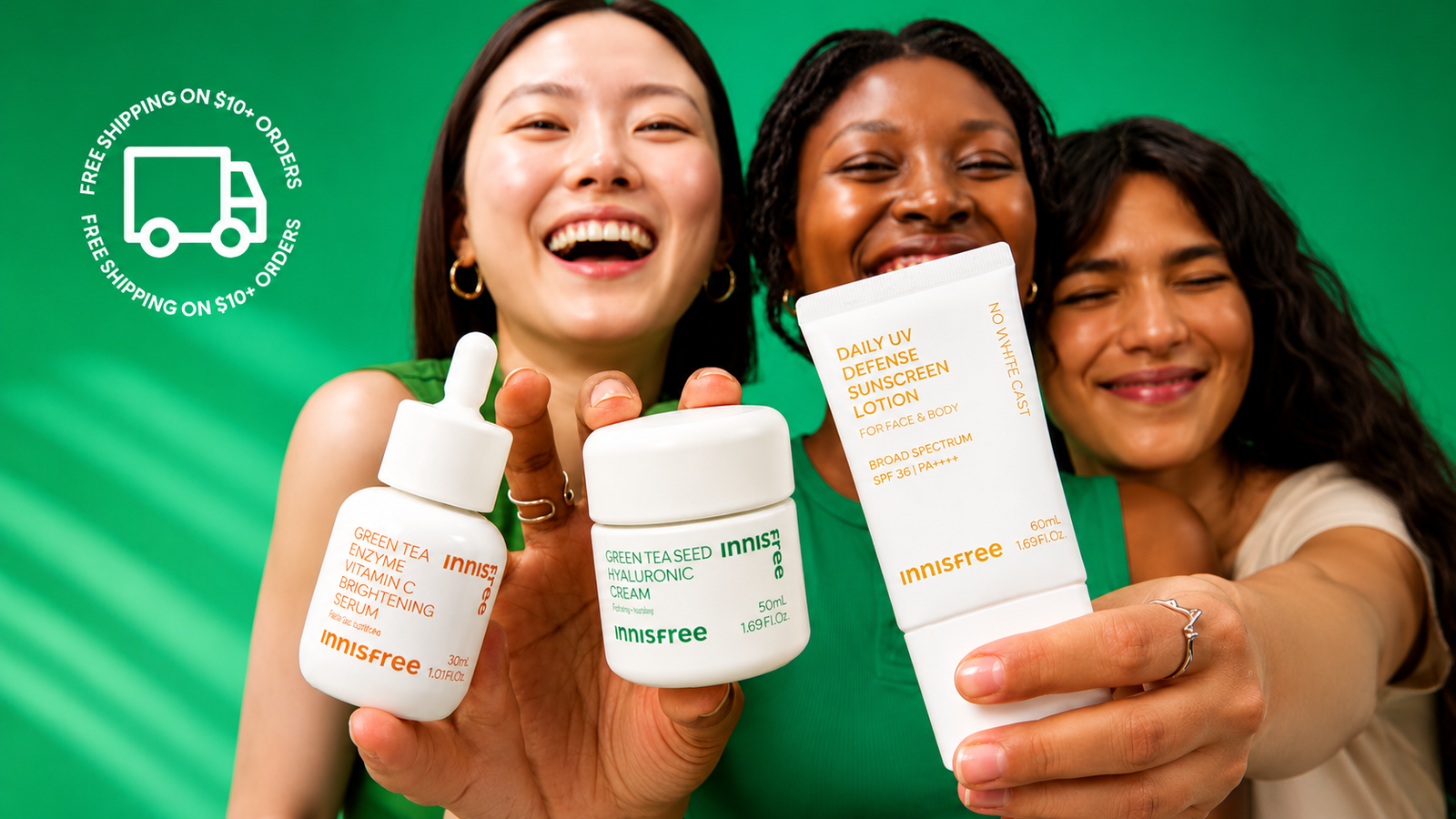
Innisfree Daily UV Defense Sunscreen Review: Worth the Hype?
Sunscreen is the one skincare step dermatologists agree matters most, and it's also the step most people skip or half-heartedly apply because it feels greasy, leaves a white cast, or fights with makeup. K-beauty sunscreens built their entire reputation on solving that exact problem, and Innisfree's Daily UV Defense has quietly become one of the most reached-for options in that category not because of a flashy launch, but because it consistently shows up in "actually good" lists rather than just "trending" ones.
At $16 for a 1.69 oz bottle, it's also priced well below most of the prestige sunscreens it gets compared to. Here's whether it actually holds up, or whether the reputation is doing more work than the formula.
What It Actually Is
Innisfree Daily UV Defense is a broad-spectrum SPF 36 chemical sunscreen, meaning it uses organic UV filters (avobenzone, homosalate, octisalate, and butyloctyl salicylate) rather than the zinc oxide or titanium dioxide you'd find in a mineral formula. Avobenzone specifically handles UVA coverage the rays responsible for premature aging while homosalate and octisalate cover UVB, the rays behind sunburn. Together, that combination is what gives it genuine broad-spectrum protection rather than just a high SPF number that only addresses burning.
One detail worth knowing if you've read that avobenzone can break down in direct sunlight: this formula uses a stabilized avobenzone system, which is exactly why it holds up as a legitimate broad-spectrum option rather than losing effectiveness a couple hours in.
Why People Actually Like It
The formula's biggest selling point isn't really the SPF number it's the finish. Reviewers across skin types, including people specifically describing themselves as oily, acne-prone, or sensitive, consistently report the same thing: it applies with genuinely no white cast, doesn't pill under makeup, and leaves a soft, dewy finish rather than a greasy one. For a sunscreen you're supposed to reapply throughout the day, that "actually pleasant to wear" factor matters more than most spec sheets suggest a sunscreen that feels bad gets skipped, and a skipped sunscreen protects nobody.
It also carries a handful of skin-supporting botanicals that go beyond pure sun protection: centella asiatica (cica) to calm any irritation the chemical filters might cause, green tea for antioxidant support, sunflower seed oil for lightweight moisture, and purslane extract adding another layer of anti-inflammatory benefit. This is where the K-beauty influence really shows it's formulated to actively support the skin underneath, not just block UV rays and stop there.
The Value Comparison
This is genuinely where Innisfree separates itself from the pack. At roughly $9.50 per ounce, it undercuts most of the comparable broad-spectrum chemical sunscreens people typically compare it to:
| Sunscreen | Approx. Price |
|---|---|
| Innisfree Daily UV Defense (1.69 oz) | $16 |
| Supergoop! (comparable size) | $22-$36 |
| La Roche-Posay | ~$34 |
| EltaMD | ~$39 |
That's not a small gap depending on which competitor you're comparing it to, Innisfree costs roughly a third to half as much for a similar broad-spectrum, no-white-cast experience. For a product you're supposed to use daily and reapply, that price difference adds up fast over a year.
Where It's Not Perfect
To keep this an honest review rather than a highlight reel, a few things are worth knowing before you buy:
- SPF 36 isn't the highest available. Plenty of competitors go up to SPF 50, and if you have a history of sun sensitivity, significant sun exposure, or specific medical guidance to use higher SPF, that's worth factoring in rather than assuming higher is always necessary for everyday wear
- It's a chemical, not mineral, formula. Chemical filters like avobenzone and homosalate are excellent at avoiding a white cast and blending invisibly, but they can be more likely to irritate very reactive or allergy-prone skin compared to a zinc-based mineral sunscreen
- Reapplication still matters. No sunscreen, however well-formulated, protects all day on a single morning application — this one included
If You Have Sensitive or Reactive Skin
Worth knowing: Innisfree also makes a Mineral version of this same Daily UV Defense line, built around zinc oxide instead of chemical filters, with a green-tinted formula designed to color-correct redness alongside cica, hyaluronic acid, and squalane for hydration. If your skin tends to react to chemical UV filters, or you've had issues with stinging or breakouts from avobenzone-based sunscreens in the past, that mineral version is worth choosing over the standard Daily UV Defense reviewed here same brand philosophy, different filter technology.
Who This Sunscreen Is Actually Good For
Great fit if you:
- Want a genuinely no-white-cast, makeup-friendly daily sunscreen without paying prestige prices
- Have oily, acne-prone, or combination skin and want something lightweight rather than heavy or greasy
- Like a dewy, glowy finish rather than a fully matte one
- Want added skin-soothing botanicals rather than a bare-bones SPF-only formula
Consider the Mineral version or a different product if you:
- Have very reactive or allergy-prone skin that struggles specifically with chemical UV filters
- Need SPF 50 specifically for medical or high-sun-exposure reasons
- Prefer a fully matte finish over a dewy one
Frequently Asked Questions
Does Innisfree Daily UV Defense really leave no white cast? Yes, this is consistently the most praised aspect across independent reviews and customer feedback it's a chemical sunscreen, which is inherently better at avoiding the white cast associated with mineral (zinc/titanium) formulas.
Is SPF 36 enough for daily use? For typical daily activities and sun exposure, SPF 36 broad-spectrum protection is generally considered sufficient by dermatology guidelines, which recommend SPF 30 or higher as a baseline. If you have specific medical guidance for higher SPF or expect prolonged direct sun exposure, a higher-SPF option may be more appropriate.
Is this sunscreen good for sensitive skin? Many reviewers with sensitive or acne-prone skin report good results, aided by the inclusion of centella asiatica and other soothing botanicals. However, because it uses chemical UV filters rather than mineral ones, those with a history of reacting specifically to chemical sunscreens may prefer Innisfree's Mineral version instead.
How does it compare to more expensive sunscreens like Supergoop or La Roche-Posay? Independent comparisons consistently note that Innisfree delivers a similar no-white-cast, broad-spectrum experience at roughly a third to half the price of these prestige alternatives, making it one of the stronger value picks in the category.
The Bottom Line
Innisfree Daily UV Defense earns its reputation less through hype and more through simply being a well-formulated, pleasant-to-wear sunscreen at a price that makes daily reapplication an easy habit rather than a chore. The stabilized broad-spectrum chemical filter system, genuinely no-white-cast finish, and added botanical support give it real substance behind the popularity just know that if you specifically need mineral filters or a higher SPF, there are better-suited options, including Innisfree's own Mineral version, worth considering instead.